Floating Island
2022-
Large-scale environmental sculpture installed on the sea
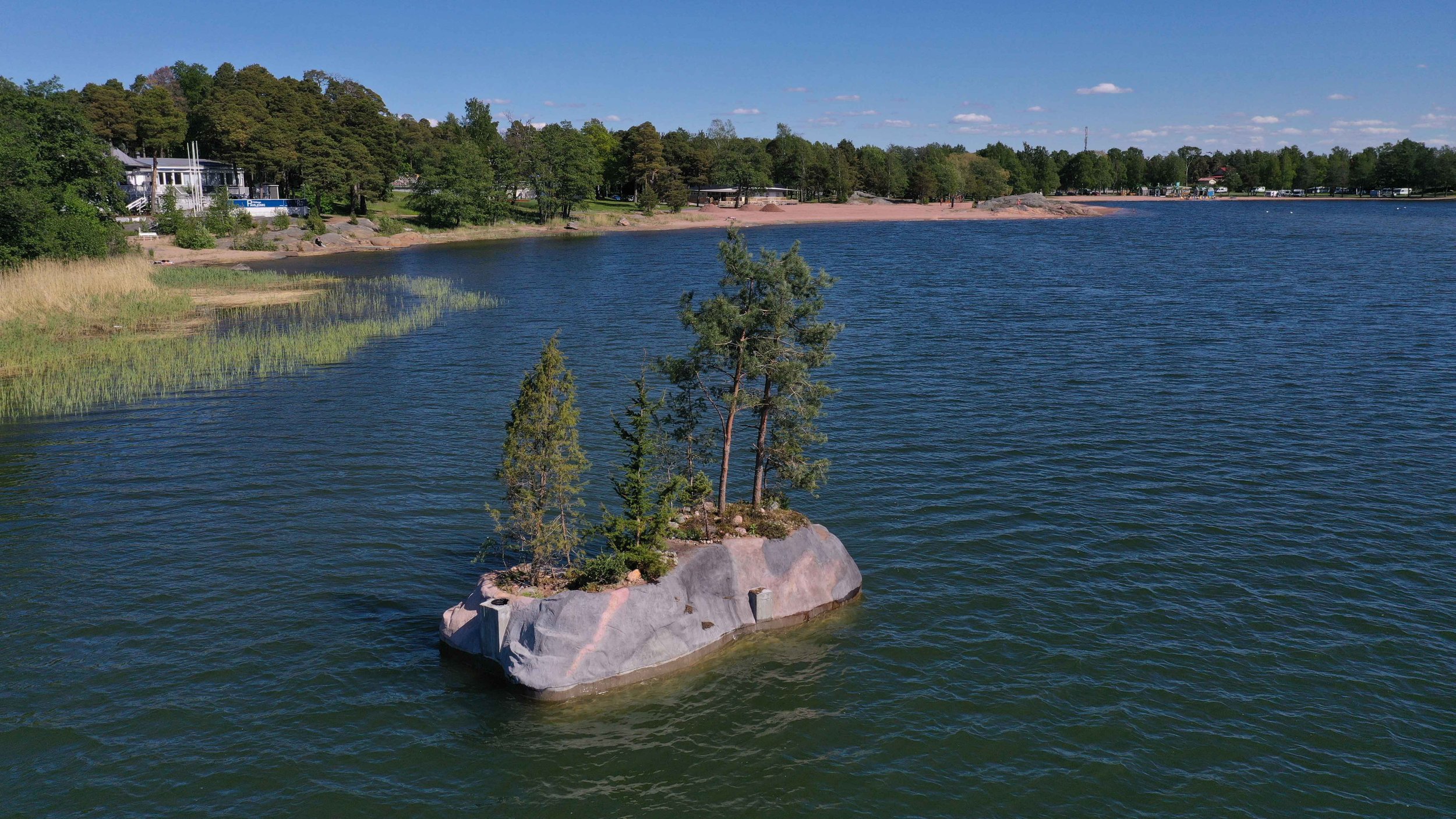
Photo: Olli-Timo Airevuo
Materials: concrete, steel structure, floating concrete pontoon, living plants, soil.
Dimensions and location: 3,7 × 7,2m, approx. 25 m², Otanlahti, Rauma
Floating Island is a large-scale environmental artwork installed at sea. A hand-sculpted, rocklike concrete shell floats on a polystyrene core used in marine pontoons, supporting a living assemblage of trees, shrubs and ground plants shaped by wind and coastal conditions. The work questions how Western culture defines what belongs to “nature,” and how human-made environments blend into landscapes.
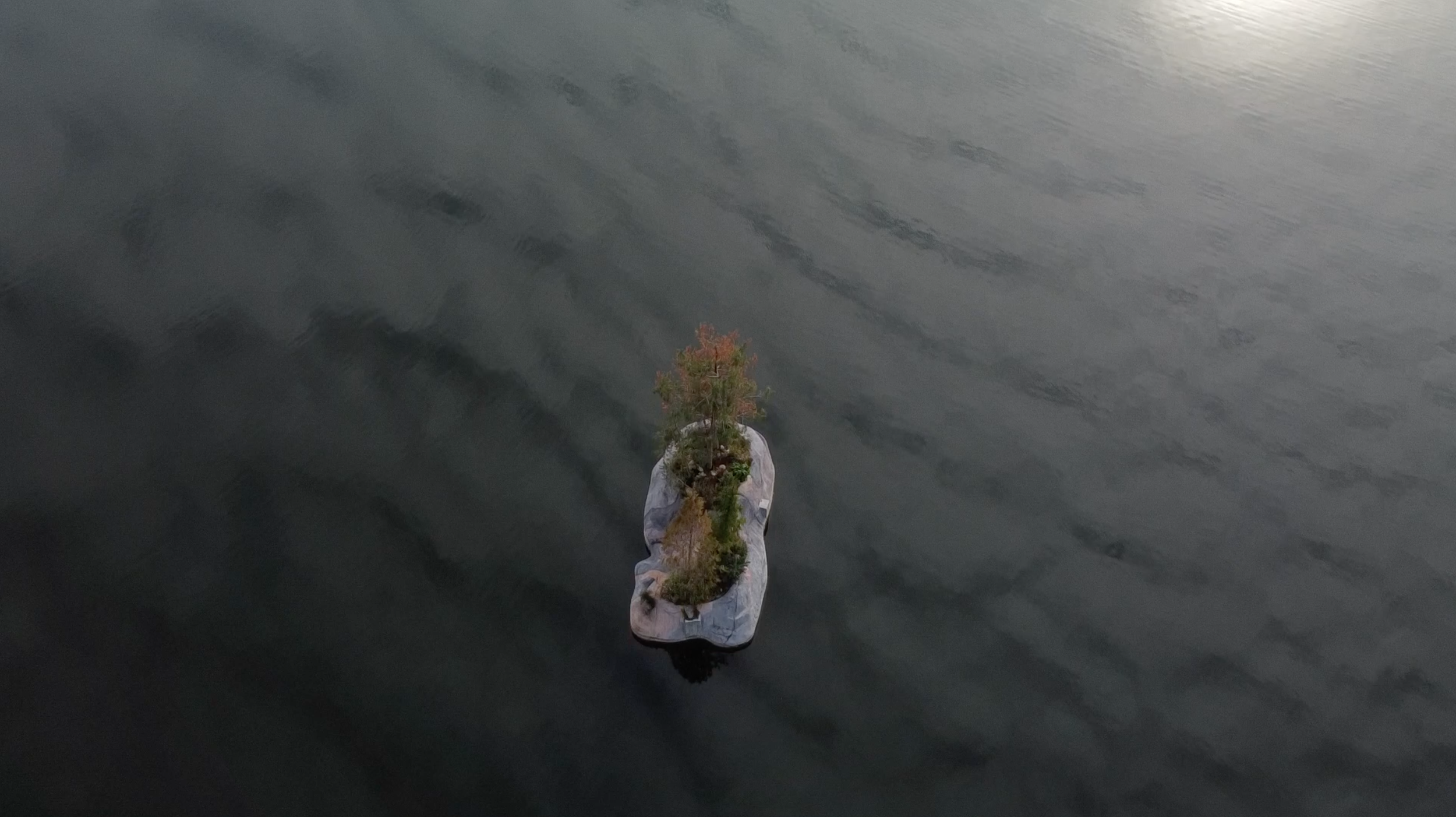
Photo: Olli-Timo Airevuo


Floating Island is a sculptural fragment of landscape set adrift on the sea. Roughly twenty-five square meters in size, the island is kept afloat by a polystyrene core similar to the structures used in concrete pontoons. Its outer surface—modelled to resemble bedrock—has been hand-formed from fully pigmented concrete. Into its carved pockets of soil, the artist has planted wind-shaped pines, juniper, balsam fir and mountain hemlock. The ground layer hosts a variety of ground-level species, including succulents, Dianthus (meadow pinks), kalmia and wild oregano. Placed within a maritime setting, this artificial island raises questions about what Western worldviews consider “natural.” For centuries, humans have positioned themselves, their cultures and their constructions outside of nature—idealising the notion of untouched wilderness while seldom acknowledging how rare such places have become. The human impact on landscapes is so extensive that it is difficult to grasp the depth of these transformations. Can nature be imitated? And how do we perceive a constructed island when it appears in a real seascape? With this work, the artist considers the relationship between built and so-called natural environments in a world where human influence is omnipresent. The island inhabits this tension, simultaneously mimicking and becoming a form of landscape.
Floating Island is anchored in Otanlahti, off the shore of the headland Fåfänga. It can be viewed from multiple points along the surrounding shoreline, and closely from the waterfront between the Fåfänga pavilion (Suvitie 4) and the Merikylpylä sauna. Exposed to the weather conditions of the west coast and the changing seasons, the work lives and shifts as time and climate reshape it.
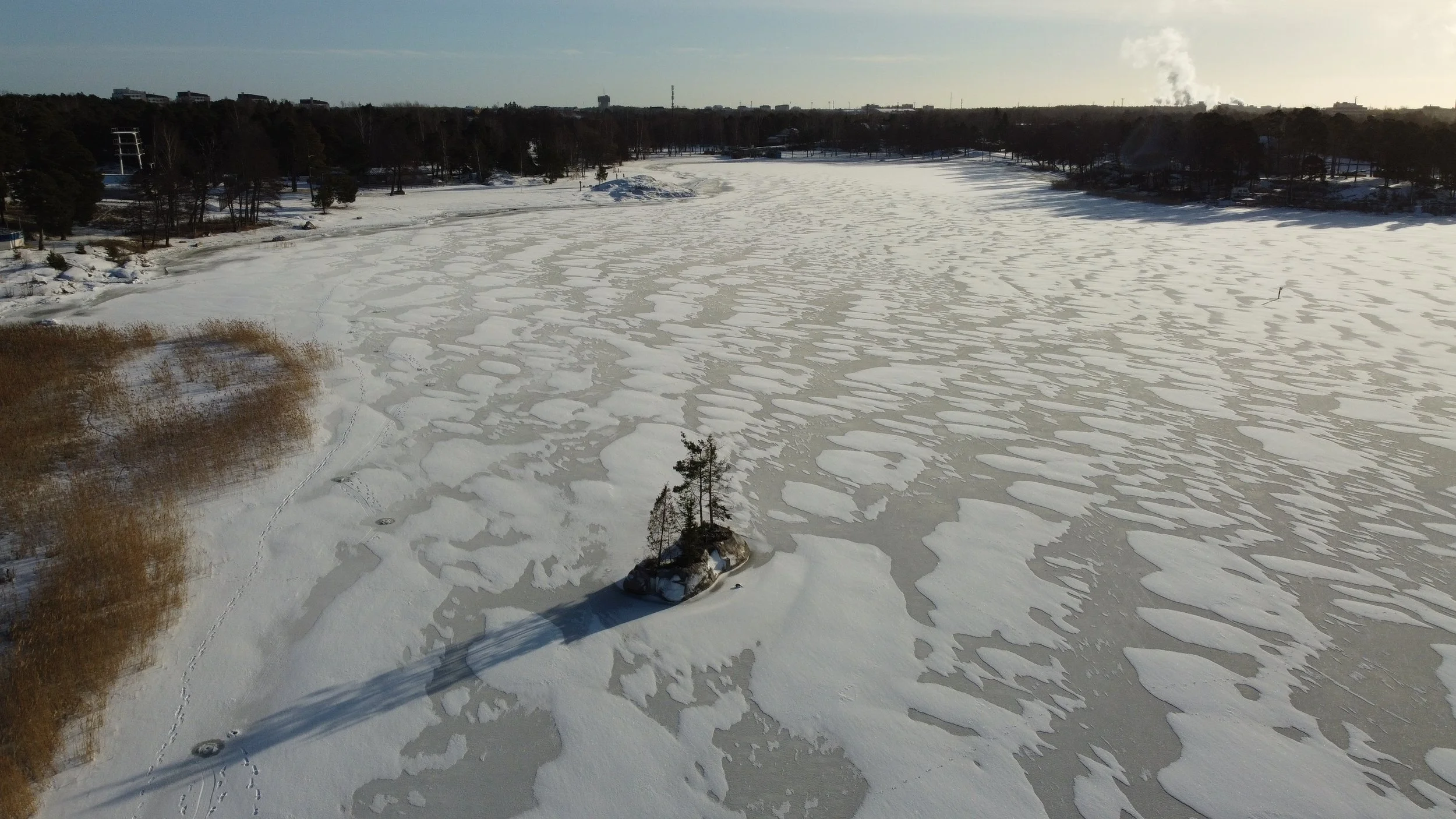
Photo: Olli-Timo Airevuo
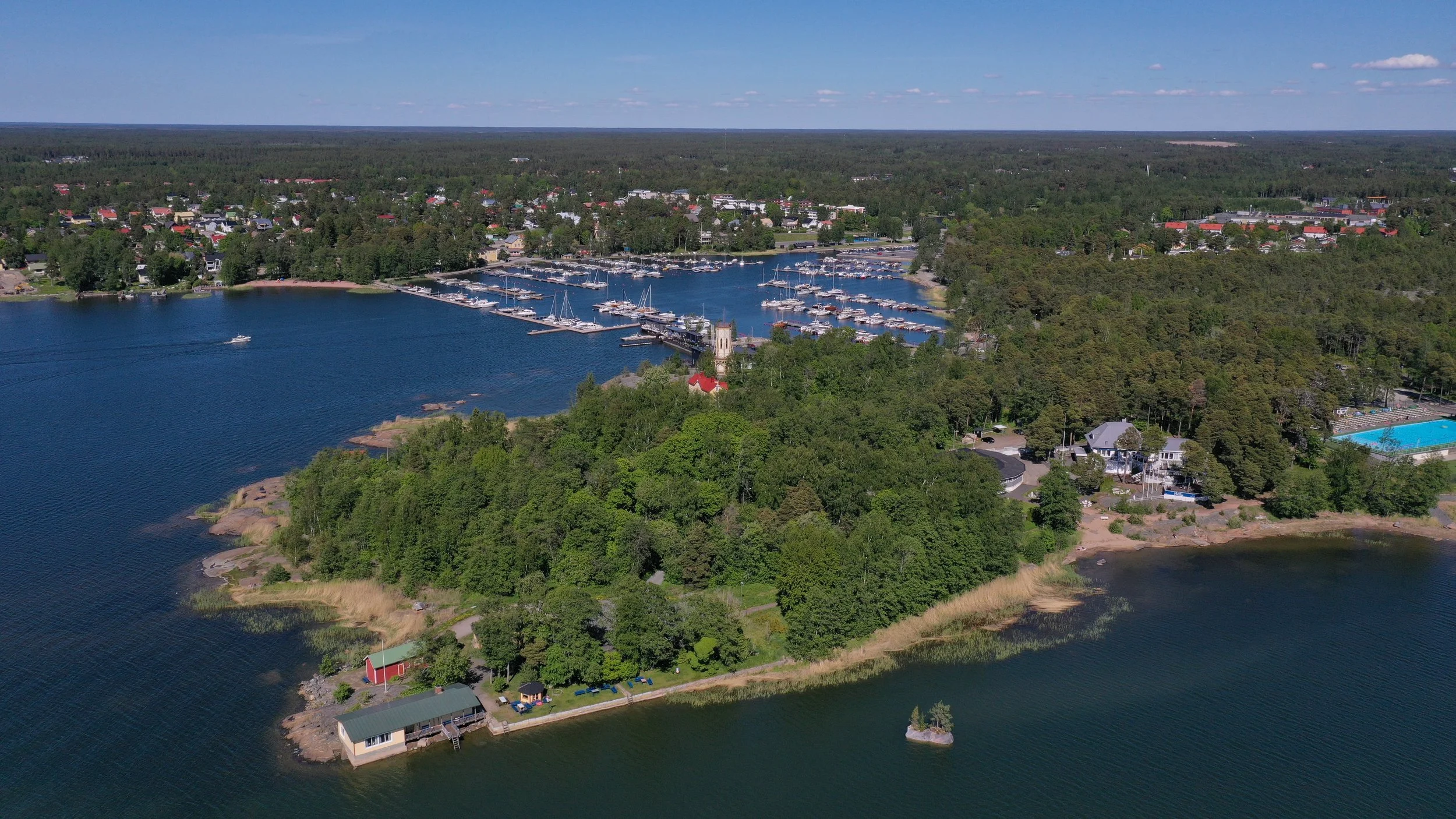
Photo: Olli-Timo Airevuo.
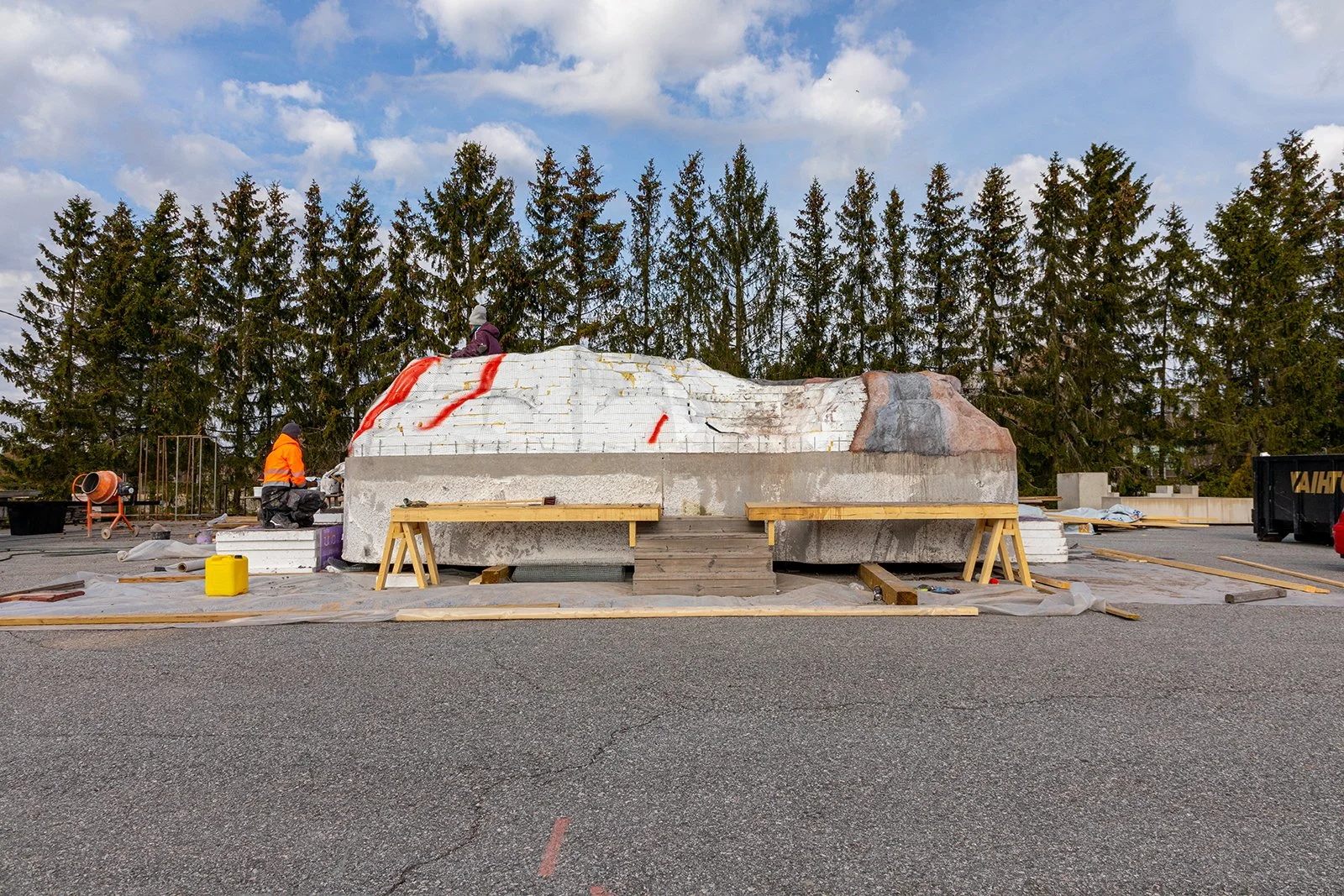
Photo: Jari Laurén
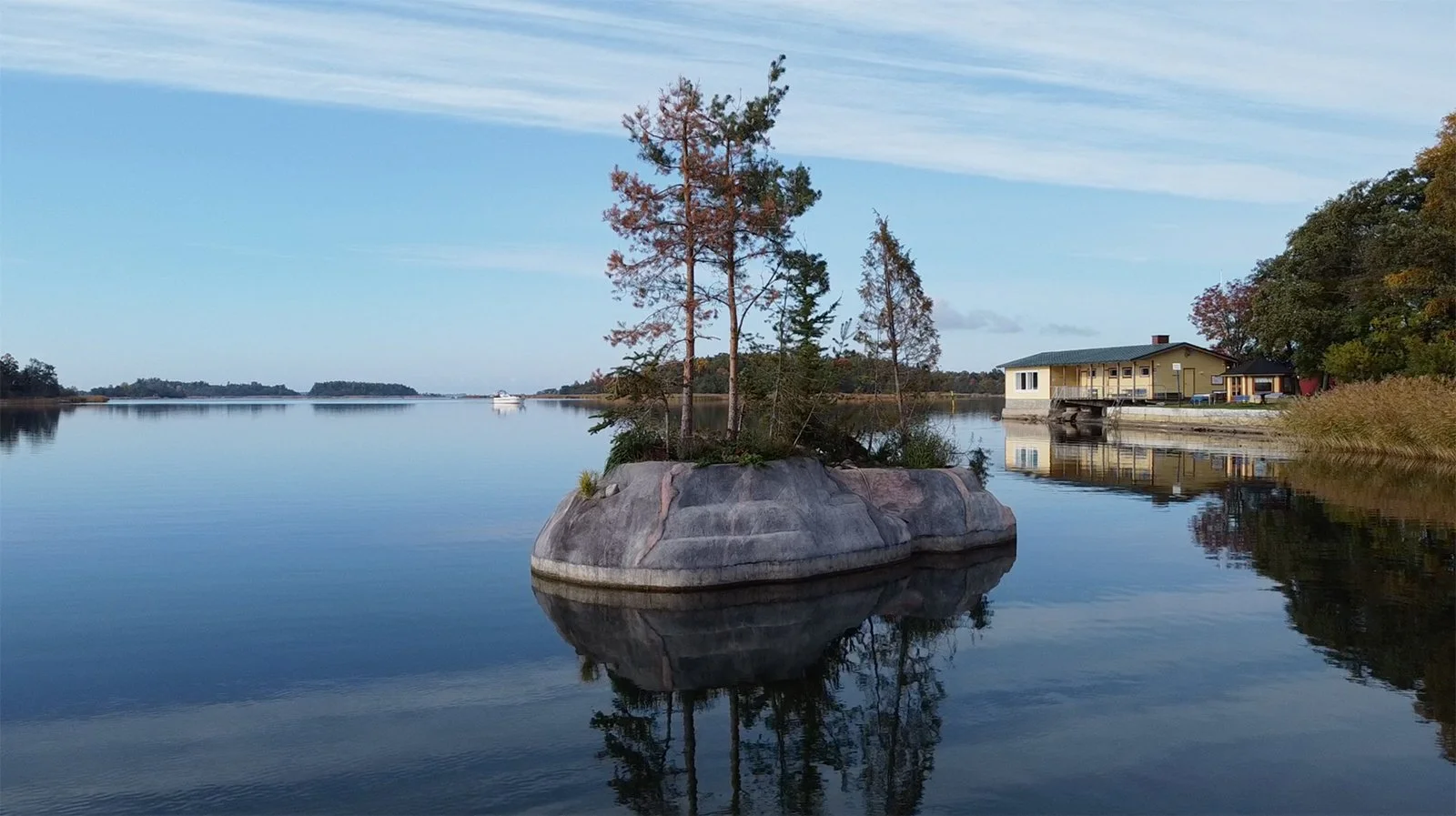
Photo: Olli-Timo Airevuo
2022– · betoni, teräsrakenne, betoniponttoni, kasvit, multa · 3,7 × 7,2 m · Otanlahti, Rauma · Kuvat: Olli-Timo Airevuo, Jari Laurén
Raumalla Otanlahden vesillä kelluu noin 25 neliömetrin saari. Sen kalliota muistuttava pinta on muotoiltu käsin läpivärjätystä betonista, ja sitä kannattelee ponttonien tapaan solumuovinen ydin. Pinnan syvennyksissä, jotka on täytetty hiekalla ja mullalla, kasvaa muun muassa tuulen muovaamia mäntyjä, katajaa, palsamipihtaa ja tyrniä sekä saariston kasvillisuutta.
Teos kysyy, mitä länsimainen luontokäsitys pitää luonnollisena. Kun rakennettu saari kelluu todellisessa merimaisemassa, raja jäljitelmän ja maiseman välillä hämärtyy. Sää ja vuodenajat muokkaavat teosta jatkuvasti.
Saari on yhtä aikaa maiseman jäljitelmä ja osa maisemaa. Se elää omaa elämäänsä, ja sen varaan on muodostunut oma pieni ekosysteemi, joka on jatkuvassa hienovaraisessa muutoksessa. Saaren runko on suunniteltu mahdollisimman kestäväksi ja pitkäikäiseksi. Sen arvioitu kesto on vähintään 60 vuotta.